Sonic Drive In History: How a Tiny Root Beer Stand Became America’s Drive In
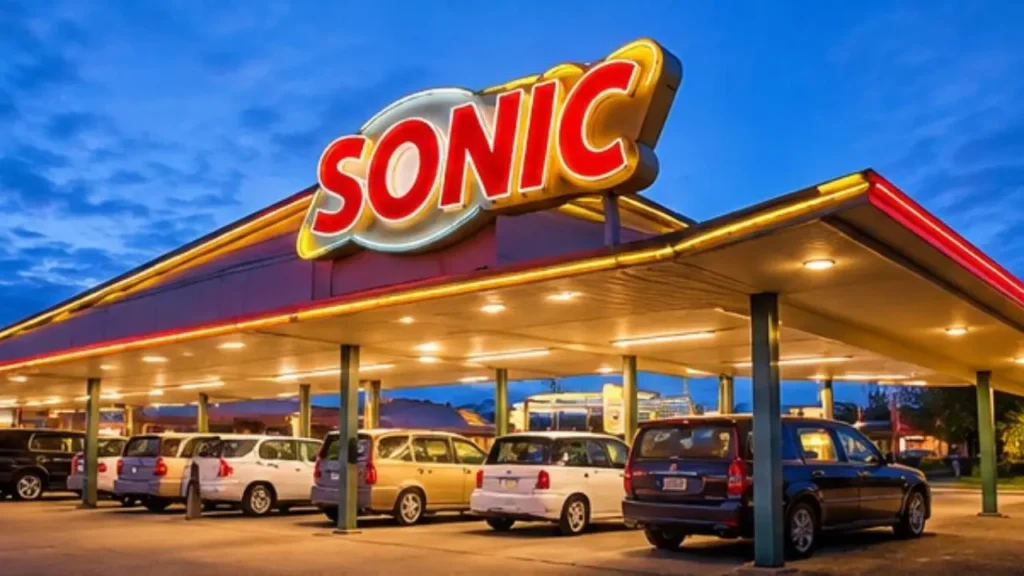
You’ve probably sat in a Sonic Restaurant at least once. You pressed the red button, ordered a drink, and waited for a carhop to bring it out to your car. Ever wonder where that idea came from? It didn’t start in a fancy office. It started with one man in Oklahoma who noticed his tiny root beer stand was making more money than his restaurant.
This is the full Sonic Drive In story, from 1953 to today. You’ll meet the founder, find out why the name changed, and see how a roadside stand grew into a chain with more than 3,400 locations.
Who Was Troy Smith?
Troy N. Smith Sr. didn’t plan to build a famous restaurant chain. He came home from World War II to Seminole, Oklahoma, and took the first job he could find. The job was delivering milk. Then he switched to delivering bread, and the reason is kind of funny. Bread is lighter than milk.
After that, Smith moved into food. He bought a small diner in Shawnee, Oklahoma, called the Cottage Cafe. He sold it soon after and opened a chicken place called Troy’s Pan Full of Chicken on the edge of town. Neither business turned into a giant. But Smith learned something from each one. He figured out what customers wanted and what actually made money.
Think about that for a second. Before Sonic existed, its founder had already tried milk, bread, a diner, and a chicken shop. He kept trying until something clicked. If you’ve ever started something and watched it flop, that should make you feel a little better.
The Top Hat Stand in 1953
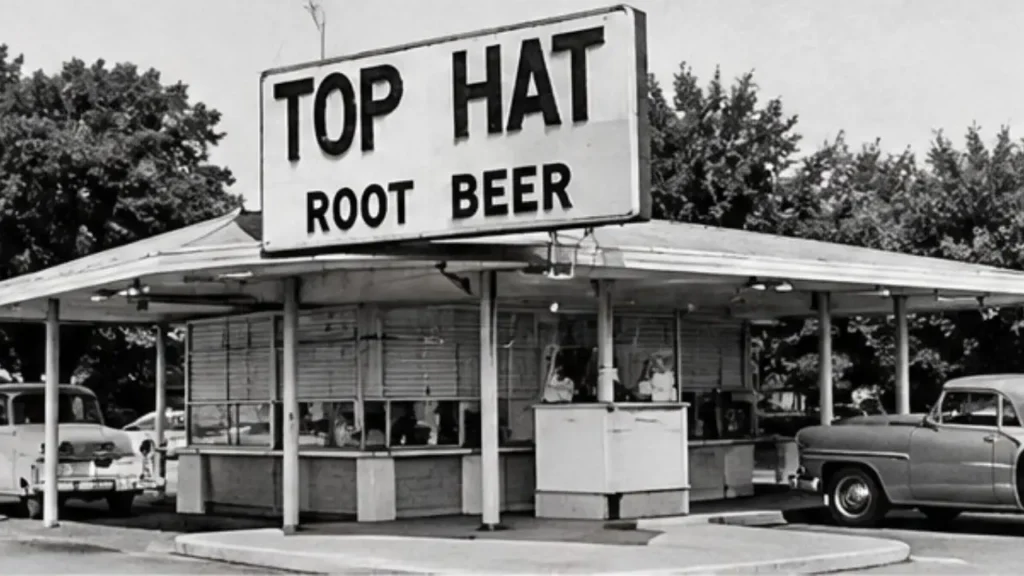
In 1953, Smith teamed up with a business partner and bought five acres of land in Shawnee. The land came with two things. One was a log house. The other was a small walk up root beer stand called the Top Hat. The plan was simple. They’d keep the root beer stand running and turn the log house into a steak restaurant.
Then Smith looked at the numbers. The little stand was averaging about $700 a week selling root beer, burgers, and hot dogs. For a stand that size in the early 1950s, that was real money. So, he made a big decision. He decided the stand mattered more than the steakhouse. He bought out his partner and put all his energy into the stand.
The company counts June 18, 1953 as its birthday. Back then, nobody called it Sonic. It was the Top Hat Drive In. And it was nothing like the Sonic you know. Customers parked anywhere they wanted on a gravel lot and walked up to the window to order. No speakers, no carhops and no tater tots. Just root beer, burgers, and hot dogs.
The Speaker Idea That Tripled Sales
Smith kept staring at that gravel lot. Cars were parked in every direction, and every customer had to walk up to order. Then he took a trip to Louisiana and saw something new. A drive in there let customers order through a speaker without leaving their cars.
Smith figured he could sell more if he controlled the parking and let people order from their seats. So he got to work. He borrowed several cars from a friend who owned a used car lot. He used them to plan neat rows of parking spots. Then he asked some jukebox repairmen to wire an intercom system across the lot.
Carhops would carry the food out to each car. The result was almost shocking. Sales tripled right away. One small change in how people parked and ordered tripled his business. He didn’t invent a new recipe. He just found a better way to serve the same food.
That speaker and carhop setup is still the heart of Sonic. If you’ve ever ordered from a stall, you’ve used Smith’s idea.
Charlie Pappe and the First Franchise
Smith’s drive in started turning heads. One person who noticed was an entrepreneur named Charles Woodrow Pappe, who most people called Charlie. Pappe loved what he saw in Shawnee. He and Smith talked it over, and in 1956 they agreed to open the first franchise location in Woodward, Oklahoma.
Here’s the wild part. They did it on a handshake. No thick contract and no lawyers in the room. By 1958, two more drive ins opened, one in Enid and one in Stillwater. You might wonder how they made money from these early franchises. Honestly, they didn’t have a real system yet. They had no royalty plan, no standard menu, and no detailed rules for running a store.
So they came up with a quirky fix. Their paper company charged an extra penny for every Sonic label hamburger bag it sold. Smith and Pappe split that money. One penny per bag. That’s how the first Sonic royalty worked. It sounds tiny, but it shows you how scrappy these two were. They built the plane while they flew it.
Why Top Hat Became Sonic?
Then came a problem. As Smith and Pappe pushed for more locations, they learned the name Top Hat already belonged to someone else. It was trademarked. They couldn’t keep using it, so they needed a new name fast. The answer was already sitting in front of them. Their slogan was “Service with the Speed of Sound.”
In 1959, they picked the name Sonic. It matched the slogan perfectly, and it told customers exactly what to expect, which was quick service. The first Sonic sign went up at the Top Hat Drive In in Stillwater. That spot became the first of three Sonics in town.
The building with that first sign stayed put for more than 55 years. The company tore it down and rebuilt it in May 2015. One more thing about names. You’ll see some sites write the slogan as “Service at the Speed of Sound.” Wikipedia and a Sonic franchise owner’s own history page both say “with,” so that’s the one to trust.
The 1960s and 1970s: Growing Fast
Once the Sonic name was set, the chain started to spread. First it grew slowly, then very fast. In the 1960s, the founders set up a supply and distribution division called Sonic Supply. It helped stores get the same basic supplies. They hired two longtime franchise owners, Marvin Jirous and Matt Kinslow, to run it.
Sonic drive ins popped up in small towns across Oklahoma, Texas, Kansas, New Mexico, Missouri, and Arkansas. Now look at the numbers. In 1967, the year Pappe died, Sonic had 41 drive ins. By 1972, it had 165. By 1978, it had reached 1,000.
That’s a jump from 165 to 1,000 in about six years. Your local pizza place couldn’t keep up with that. In 1973, the company turned into a real franchise business and took the name Sonic Systems of America. It gave franchise owners equipment, building plans, and basic instructions for running a store.
The menu grew too. In 1968, Sonic introduced Pickle O’s, which are fried pickle slices. Yes, fried pickles at a drive in were already a thing back then. In 1977, the company opened the Sonic School to train managers. That mattered because franchise owners ran most of the stores, and many of them made their store manager a business partner.
That idea still shows up in the chain today. The first Sonic TV commercial also ran in the late 1970s. Sources disagree on the exact year, with some saying 1976 and others saying 1977, so I’ll leave it there.
The 1980s: A New Boss and a Famous Face
In 1983, the company’s board hired C. Stephen Lynn as president. The next year, Lynn brought in a lawyer named J. Clifford Hudson to run the legal department. Remember that name. Hudson became chairman of Sonic Corp. in January 2000.
Under Lynn, Sonic and its biggest franchise owners started local advertising groups. Stores in the same area pooled their money so they could run ads together. A man named Keith Sutterfield built that system, first as advertising manager and later as vice president of marketing.
Then came the celebrity. From 1987 to 1993, Sonic ran ads with singer and actor Frankie Avalon. Those ads helped people far outside Oklahoma learn the Sonic name. The money side changed too. In 1986, Lynn and a group of investors paid for a $10 million leveraged buyout and took Sonic private. A year later, the company moved its offices to downtown Oklahoma City.
Here’s a simple way to think about it. The 1980s were when Sonic stopped acting like a pile of separate roadside stands and started acting like one brand.
The 1990s: Public Again and a Big Makeover
In 1991, Sonic became a public company again, so regular people could buy its stock. By 1994, the company had renegotiated its agreements with franchise owners. During the middle of the 1990s, Sonic opened 100 to 150 new stores every year. That’s roughly two or three new Sonics every single week.
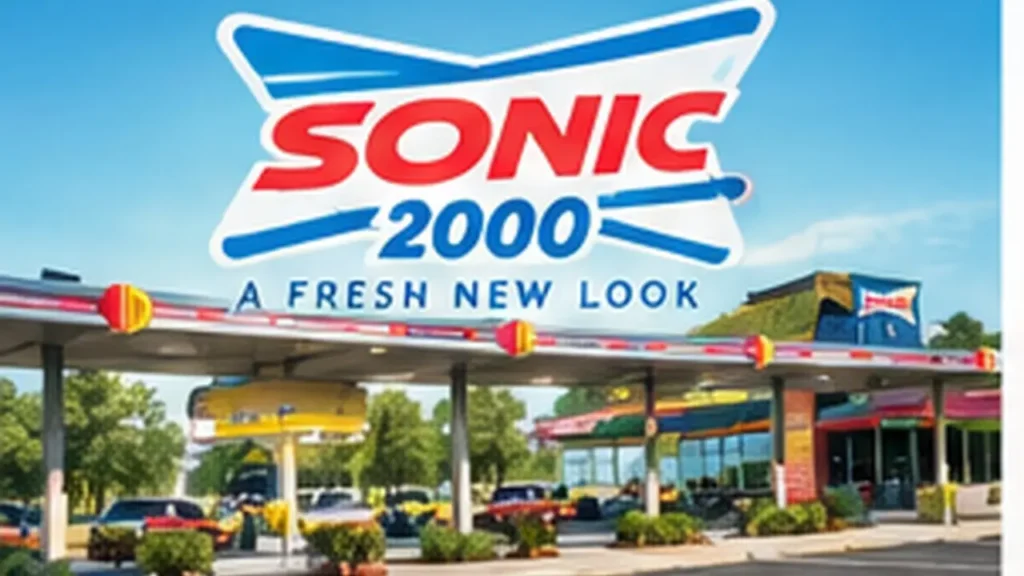
In 1998, the company started a project called Sonic 2000. The goal was to redesign all 1,750 stores with what people called a “retro future” look.
I like that phrase. It means old school drive in charm mixed with a modern style. A year later, in 1999, a new ad campaign introduced a character named Katie the Carhop. She gave the brand a friendly face.
The 2000s: Satellites, Radio, and TV Fame
Early in the 2000s, Sonic menu got a lot more high tech than you’d expect from a roadside chain. In September 2002, the company launched PartnerNet. It used satellite service to connect every Sonic store to the corporate office. Stores could process credit cards and watch training videos through it.
Then there was Sonic Live Radio. Yes, real radio, with live hosts and a toll free request line at 866 SONIC FM. It reached all locations in February 2003. Nobody in corporate America had done anything like it, and Walmart copied the idea later.
In 2003, a reality show gave Sonic a surprise boost. Paris Hilton and Nicole Richie starred in The Simple Life, and they had to work at a Sonic in Altus, Arkansas. Neither one had ever held a job before.
That same year, Sonic turned 50. To celebrate, it launched a limited Birthday Cake Shake and brought Pickle O’s back for a while. Sonic also opened its 3,000th drive in during this decade, right in Shawnee, Oklahoma. That’s the same town where Troy Smith started with a root beer stand.
In 2004, Sonic began running its famous “Two Guys” commercials. Two improv actors, T. J. Jagodowski and Peter Grosz, chatted away in a car about nothing in particular. The ads ran on TV in cities hundreds of miles from the nearest Sonic.
In 2005, the company started putting card readers in the stalls at its 544 company owned stores. Paying without leaving your car got easier. In 2007, Sonic opened its first stores in the Northeast, starting in Waretown, New Jersey.
Tough Years and the Real Ice Cream Move
Not everything went smoothly. The recession of 2008 and 2009 hit Sonic hard. Sales at existing stores fell for several quarters in a row in 2009. Still, the company made some smart moves. In 2009, it teamed up with DonorsChoose.org on a program called Limeades for Learning.
Public school teachers ask for supplies, and Sonic customers vote on where more than $500,000 goes each fall. In the first seven years, Sonic and its franchise owners gave more than $6 million and helped more than 349,000 students.
In 2010, Sonic changed its soft serve so it met the FDA’s rules for real ice cream menu. It launched Real sonic Ice Cream on May 17, 2010. A month later, in June 2010, it rolled out a Footlong Quarter Pound Coney. If you love a good hot dog, you can thank that year’s menu team.
The Sonic Beach Experiment
This is the part of Sonic history, mostly people forgot. In June 2011, Sonic opened a different kind of restaurant called Sonic Beach in Homestead, Florida. A second one opened in Fort Lauderdale in November 2011. Because of its beachside spot, that one had no drive in stalls at all. A third opened in Miami Gardens, and a fourth opened in Lauderhill in January 2014.
These places had outdoor seating and flat screen TVs. The menu added popcorn shrimp, Philly cheesesteaks, and pulled pork sandwiches. They even served beer and wine.
It didn’t last. The first two locations closed, and the rest went back to the regular Sonic name. A few still use the Sonic Beach logo. The lesson is simple. Even a famous chain tries things that don’t stick, and that’s okay.
Slogans, Ads, and a Few Surprises
Sonic has changed its slogan many times. The first one, in 1958, was “Service With the Speed of Sound.” In 1987, it switched to “America’s Drive In.” From 2003 to 2011, the slogan was “It’s Sonic Good.” Then came “This Is How You Sonic,” which ran from 2011 to 2020. In 2022, the company tried “Mmm. Sonic.” and in 2024 it moved to “Live Free, Eat Sonic.”
The “Two Guys” ads came back in 2012. In 2018, Sonic added “Two Gals,” played by Ellie Kemper and Jane Krakowski. In 2020, the company moved to a campaign called “Everyday People,” which used families instead of pairs of friends.
Sonic also dipped into racing. It became an associate sponsor for Dale Earnhardt Sr. in the 2001 NASCAR season. After Earnhardt died in a crash at the 2001 Daytona 500, Sonic stayed on with his replacement, Kevin Harvick, through 2003. The company came back to NASCAR in 2015 and backed driver Sam Hornish Jr.
Here’s my favorite weird one. In 2018, St. Louis Cardinals outfielder Harrison Bader teamed up with Sonic to sell “Bader Tots” at some St. Louis area locations. A young fan had handed him a tater tot earlier that year, and the joke stuck.
Moving Into New States
Sonic kept pushing into new places. On October 26, 2015, it opened its first Rhode Island location in Smithfield. The store reported 500 orders on its very first day. In September 2017, Sonic opened its first Alaska store in Wasilla. A second one opened in Fairbanks about a year later.
Hawaii took the longest. Back in 2017, Sonic said it would open seven stores there soon. The first one didn’t open until May 2026, in Kapolei. That’s more than eight years later.
During this stretch, Sonic also began a refranchising push in the middle of the 2010s. That means it sold more company owned stores to franchise owners.
Inspire Brands Buys Sonic in 2018
On September 25, 2018, Inspire Brands announced it would buy Sonic Corp. for $2.3 billion. The deal closed on December 7, 2018. Inspire Brands is based in Atlanta. It also owns Arby’s, Jimmy John’s, Buffalo Wild Wings, Baskin Robbins, and Dunkin’.
Before the sale, Sonic’s stock traded on the NASDAQ under the symbol SONC. After the sale, Sonic became a subsidiary of Inspire.
Today, John Kelly is the brand president of Sonic. He spent 25 years with Inspire and its sandwich brand Arby’s before taking the job. Paul Brown is the CEO of Inspire Brands.
A warning if you’re researching this yourself. Some older pages still list J. Clifford Hudson as Sonic’s CEO, and one kids encyclopedia page lists Atlanta as Sonic’s headquarters. Both are outdated. Sonic’s headquarters is in Oklahoma City.
Sonic in the 2020s
In 2020, Sonic unveiled a new drive in design. It has wider spots for cars, a bigger drive thru lane, and a kitchen built to move faster. Then COVID hit. In March 2020, every location paused patio dining. But the sonic setup already let people stay in their cars, so takeout and pickup kept going.
Sonic also added tipping to its online ordering app in 2020. A year later, it added the option to tip at the stalls. The company hasn’t had only good news, though. In February 2019, workers at three Ohio stores quit together after management changes. They said the company had cut their hourly pay in half. Sonic denied that claim.
In 2010, Sonic said it would move toward cage free eggs and crate free pork. Later, it backed away from those promises, and in 2024 animal welfare groups criticized it for that. I’m not telling you this to knock the brand. If you’re writing about a company or just deciding where to spend your money, you should see the full picture.
The Franchise Owners Behind Your Stall
Most Sonic restaurants belong to franchise owners, not the corporate company. Like Stuart S. Carey started a Sonic franchise in Tucson, Arizona, in 1988. Before that, he spent years running a company called Metro Beverage in Oklahoma City.
His son, Stuart J. Carey, has worked alongside him for 25 years. Today, their company runs Sonic stores in Tucson and Sierra Vista, Arizona. They say they’re proud that every Sonic is locally owned and operated.
Why does this matter to you? Because every owner runs the store a little differently. Prices, deals, and hours can change from one location to another. So if a friend tells you about a deal at their Sonic, check your own location before you drive over.
Sonic Today
Sonic now has more than 3,400 locations, and all of them are in the United States. Total system sales reached $5.2 billion in 2026. The headquarters is in Oklahoma City, and there’s even a dine in Sonic in a building next to it.
The company’s best known items include the Chili Cheese Coney, the Sonic Cheeseburger Combo, Sonic Blasts, Master Shakes, and Wacky Pack Kids Meals. Cherry Limeade, slushes, and tater tots are still big favorites too.
Sonic also holds an annual skating carhop competition at most locations, and the winners compete to be the top skating carhop in the company. Roller skates aren’t at every store, but the idea is still part of the brand’s personality.
Sonic Timeline at a Glance
Year | Historical Event |
|---|---|
1953 | Troy Smith turns the Top Hat root beer stand in Shawnee, Oklahoma, into a drive-in. |
1954 | The first franchise opens in Woodward, Oklahoma, on a handshake. |
1955 | Top Hat becomes Sonic. |
1956 | Sonic has 41 drive-ins. |
1957 | Sonic grows to 165 drive-ins. |
1958 | Sonic reaches 1,000 drive-ins. |
1959 | Sonic goes private in a $10 million buyout. |
1960 | Sonic goes public again. |
1961 | The Sonic 2000 redesign begins. |
1962 | Sonic turns 50. |
1963 | Limeades for Learning begins. |
1964 | Inspire Brands buys Sonic for $2.3 billion. |
1965 | A new drive-in design appears. |
1966 | The first Hawaii store opens in Kapolei. |
Facts People Get Wrong About Sonic
Sonic didn’t start in 1959. The business began in 1953 as Top Hat. The Sonic name came six years later.
The speaker idea came from Louisiana. Some pages say Texas. The better sources say Louisiana.
The 1,000th store came in 1978. A few pages say 1987, but the stronger sources point to 1978.
The slogan says “with.” It’s “Service with the Speed of Sound,” not “at.”
Sonic’s headquarters is in Oklahoma City. Inspire Brands is the Atlanta company.
Location counts change. You’ll see numbers like 3,400 and 3,500 on different pages. Check Sonic’s official restaurant locator if you need today’s number.
Frequently Asked Questions
When was Sonic Drive In founded?
Sonic traces its start to June 18, 1953, in Shawnee, Oklahoma. It was called Top Hat Drive In back then.
Who founded Sonic?
Troy N. Smith Sr. started it. Charlie Pappe joined him and helped open the first franchise in 1956.
Why did Top Hat change its name?
The name Top Hat was already trademarked. In 1959, the partners picked Sonic to match their slogan about the speed of sound.
Who owns Sonic now?
Inspire Brands owns Sonic. It finished buying the company on December 7, 2018.
How many Sonic locations are there?
There are more than 3,400 in the United States. The number moves as stores open and close.
Does Sonic still use carhops?
Yes. Many locations still bring food to your car, and the company holds an annual contest for the best skating carhop.